
Just as they have options for where to buy their groceries or get their car serviced, patients have options for where to seek care. While marketing strategies can get new faces in the door, a healthcare organization’s long-term success rests on more than just attracting more patients.
A key superpower for any business, including healthcare, is providing the kind of service that makes customers feel good about returning when the need arises.
A patient’s initial experience dictates whether they’ll become a repeat customer. But if they do return, they will expect the same quality experience, or they may make the choice to seek care elsewhere in the future.
Key factors that drive patient loyalty in the age of health consumerism include responsiveness(this link opens in new window), accessibility(this link opens in new window) and convenience(this link opens in new window). This article explores four tips for healthcare organizations to infuse these elements into every aspect of care and elevate patients’ experience, which in turn boosts loyalty and retention–and ultimately, long-term revenue.
Patient loyalty in healthcare: What it means and why it matters
Patient loyalty means a patient opts to return to the same healthcare organization when they need ongoing or additional care. It can also mean they will recommend the organization to their friends and family members. But they are less likely to do either–return or recommend–if they have a negative experience from the get-go or on a repeat visit or encounter.
A patient’s experience with a healthcare organization involves more than just the clinician-patient relationship. That experience matters, but it’s not the only factor in achieving patient loyalty.
Patients also experience(this link opens in new window) interactions with front-desk or administrative staff. And they encounter the healthcare organization’s digital environment, whether for scheduling, billing, renewing prescriptions, or reviewing care notes or test results. If friction or hassles arise in these areas, patient loyalty can waver.
Why patient satisfaction alone is not enough
Patient satisfaction in healthcare matters, but satisfaction doesn’t automatically translate to patient loyalty.
“While many patients report positive experiences with their providers, external considerations such as insurance coverage, network limitations and ease of access to appointments often drive decision-making,” says Stephanie Guzik(this link opens in new window), vice president of patient experience and relations at The University of Texas Medical Branch.
When patients encounter too many barriers, loyalty can falter. “Patients may choose to switch providers due to limited appointment availability, difficulty navigating scheduling processes or lack of convenient options such as online booking,” Guzik adds.
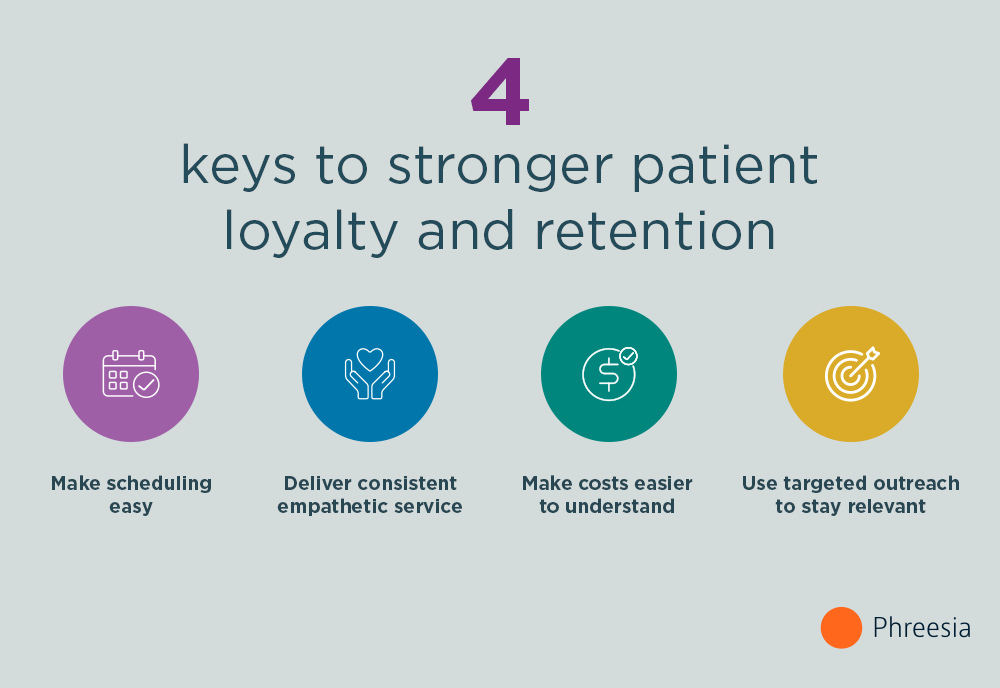
1. Make access and scheduling easy from the start
A healthcare organization can’t expect loyalty from a patient if they experience trouble getting in the door in the first place–or returning.
Although a lack of appointment availability can be a roadblock, some patients are willing to wait for preferred providers, especially for non-urgent specialty care. “Nearly half are willing to wait one to three weeks for an appointment, and approximately 30% will wait one to three months for specialty services,” Guzik says. “This reflects a level of trust in provider expertise and the importance of reputation, especially when the condition is not perceived as urgent.”
However, scheduling(this link opens in new window) difficulties overall, such as having to play an endless game of phone tag, can trump care level. “Convenience in scheduling has become a critical driver of the overall patient experience because it represents one of the first interactions a consumer has with a health system,” Guzik says.
When that experience proves difficult or time-consuming, the immediate friction erodes trust before a patient even receives care. “Nearly half of patients report being discouraged from booking an appointment if they encounter challenges contacting a clinic, underscoring how access barriers directly impact patient acquisition and retention,” Guzik says.
In the digital age, online scheduling is a must. According to a Phreesia survey of nearly 14,000 patients across its network, 18% said they preferred to schedule appointments with their providers online. That rate was even higher among younger patients, with 21% of respondents ages 18 to 24 and 25% of respondents ages 25 to 34 preferring to schedule healthcare appointments online.
Appointment booking is just one part of the scheduling process. Healthcare organizations also need to incorporate convenience with appointment reminders(this link opens in new window) and confirmations, canceling and rescheduling, waiting lists and pre-visit or check-in paperwork(this link opens in new window).
2. Deliver consistent, empathetic service at every touchpoint
Patients want to feel valued, heard and understood. The only way to ensure these characteristics is for healthcare organizations to operate with empathy for every patient interaction.
“Every touchpoint–scheduling, registration, wayfinding, digital interactions, billing and follow-up–shapes how patients perceive whether an organization understands and values them,” Guzik says. “Frontline staff, call centers and support services play a critical role in demonstrating empathy through clear communication, responsiveness, and respect for patients’ time and concerns.”
In fact, a study in the Journal of Medical Practice Management found that 96% of online patient complaints were due to service-related issues(this link opens in new window), such as long wait times, disorganization and poor staff communication.
According to a Phreesia analysis of approximately 1.2 million post-visit patient surveys, practice staff unfriendliness was one of the biggest detractors from patient satisfaction. And 61% of patients stated that they would switch healthcare providers to receive better customer service.
Patients also turn to clinician ratings to assess whether others have had a good experience. “Reputation further reinforces or undermines perceived empathy,” Guzik adds. “Approximately 86% of consumers prioritize providers with four-star ratings or higher, and this perception extends beyond traditional settings into access points such as urgent care, where more than half of consumers have sought care in the past year.”
Ultimately, empathy must be infused in every human or digital interaction, she says, as this demonstrates a true commitment to an elevated patient experience.
3. Make costs, billing and payments easier to understand
One of the biggest pain points for patients is the cost of healthcare. Patients crave transparency. Healthcare organizations have regulatory requirements regarding transparency, but organizations can do much more than just comply with rules.
“At a minimum,” Guzik says, “hospitals are required under CMS price transparency rules(this link opens in new window) to publicly post pricing information, including payer-specific negotiated rates, cash prices and a consumer-friendly list of common ‘shoppable’ services. More recent updates have strengthened these requirements, emphasizing the need for accurate, standardized and patient-accessible cost data.”
Elevated transparency offerings can translate to a more meaningful patient experience and, therefore, patient loyalty. “Clear communication, both digitally and through staff support, helps patients anticipate their financial responsibility and reduces uncertainty,” Guzik says. She recommends the following tactics:
- Offering real-time personalized cost estimates based on a patient’s insurance coverage
- Integrating financial information into scheduling workflows
- Ensuring pricing tools are easy to access and understand
“Transparency is not just about publishing prices,” Guzik adds. “It is about making cost information actionable, understandable, and integrated into the care journey. When done well, it reduces financial anxiety, builds trust and supports more informed decision-making for patients.”
Patients also want payment convenience and financial assistance where needed, including mobile payment options(this link opens in new window) and online payment plan setup(this link opens in new window) with automatic drafts. When issues arise, patients also need accessible assistance for getting their financial or payment questions answered.
4. Use targeted education, outreach and follow-up to stay relevant
Once a patient leaves an appointment, their experience continues as they navigate their health in everyday life. Continued messaging with the patient can help ensure their experience remains positive.
“Ongoing communication between visits is a well-established driver of patient loyalty,” Guzik says, “because it strengthens trust, reinforces continuity of care and keeps patients engaged in their health journey.”
Continued touchpoints, through marketing strategies and patient engagement, show that the organization cares. The additional communication provides patients the sense that they don’t have to go it alone and that the organization is in their corner.
“Evidence shows that patients who receive follow-up communication(this link opens in new window), such as reminders via text, test results and care guidance, are more likely to adhere to treatment plans, feel connected to their care team and return for future services,” Guzik says. “Patients increasingly expect this level of engagement, with the vast majority reporting that proactive updates improve their overall experience and relationship with their provider.”
How AI is changing patient loyalty and retention
Automation has helped foster patient loyalty and retention for a while now. AI can support patient loyalty and retention by providing more personalized engagement and outreach, and allowing patients more ways to manage their healthcare from their devices.
Here’s how AI is elevating patient loyalty and retention:
- Conversational AI: VoiceAI on calls aids patients with scheduling, prescription refills and questions. It helps reduce call abandonment rates and allows patients to complete healthcare tasks on their own time.
- Intelligent reminders and self-scheduling: Automated conversational text and email reminders, along with built-in tools, enable easy scheduling, appointment confirmation, cancellations and rescheduling. These tactics reduce no-shows and gaps in provider schedules.
- Personalized content: AI analyzes patient data and helps providers deliver personalized educational information and timely reminders.
- Automated administrative tasks: Administrative tasks, such as scheduling, checking-in and paying bills, are friction points for patients. AI automates these tedious tasks for frictionless patient interaction.
- Real-time feedback: Automated and customizable post-visit communication collects patient feedback, which can be used to improve patient experience.
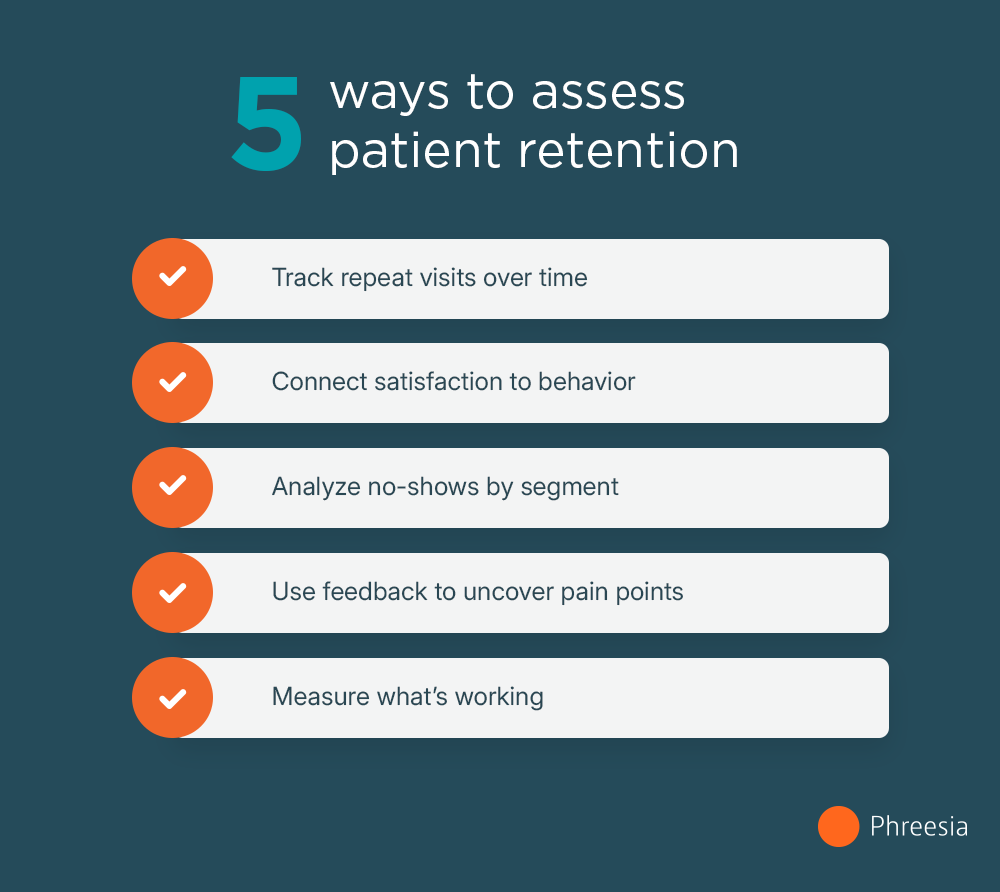
How to measure patient retention in healthcare
Measuring patient loyalty and retention comes down to more than simply tracking whether patients schedule and follow through with a repeat visit. Instead, it means analyzing how and when patients engage with care–or disengage with it. Here are five ways to assess patient retention.
- Track repeat visits and retention trends: Measure how often patients return within clinician-recommended timelines, and track groups or cohorts (such as all new patients in a given month) over time to spot trends in disengagement and reengagement.
- Pair patient satisfaction with loyalty metrics: Compare patient satisfaction survey data with patient behavior, such as return visits, rather than just reviewing survey results in isolation.
- Track no-show rates by segment to identify friction areas: Categorize no-show issues by provider, care location, appointment time and patient demographics.
- Use feedback to point to hiccups with patient experience: Survey results, provider ratings and patient comments can highlight areas that need improvement, whether long waiting room times or poor customer service issues.
- Use metrics to monitor the success of patient retention strategies: When implementing new patient retention tactics, assess their effectiveness with before and after metrics. For example, did implementing more convenient scheduling options lead to more repeat visits?
Frequently asked questions
Patient loyalty in healthcare involves patients’ likelihood that they’ll return to the same healthcare organization–or recommend it to others–because they trust the quality of care, convenience and overall service.
Patient loyalty is different from patient satisfaction. A patient can be satisfied with a provider’s quality of care, but that doesn’t mean they will return. Pain points, such as scheduling, communication issues or poor customer service in general, might create enough friction and lead patients to seek more convenient or more empathetic care elsewhere.
Scheduling convenience, empathetic service, transparent billing and ongoing communication drive patient retention in healthcare.
A version of this article was published on October 25, 2019.


