Featured
VoiceAI can now route callers to the right practice automatically
What’s new: VoiceAI now asks a brief triage question at the start of a call to route the caller to the correct practice or EHR instance. Built for organizations running multiple EHR systems across locations, this removes the need for a separate IVR layer before VoiceAI handles the call.
How this helps you: Multi-location organizations with separate EHR instances previously had no way to route inbound calls to the right instance through VoiceAI, which blocked full deployment. Now VoiceAI can serve as the first touchpoint for every call, directing patients to the right place without transfers or dead ends and freeing staff from manually triaging misdirected calls.
New in-app guidance appearing across your dashboard
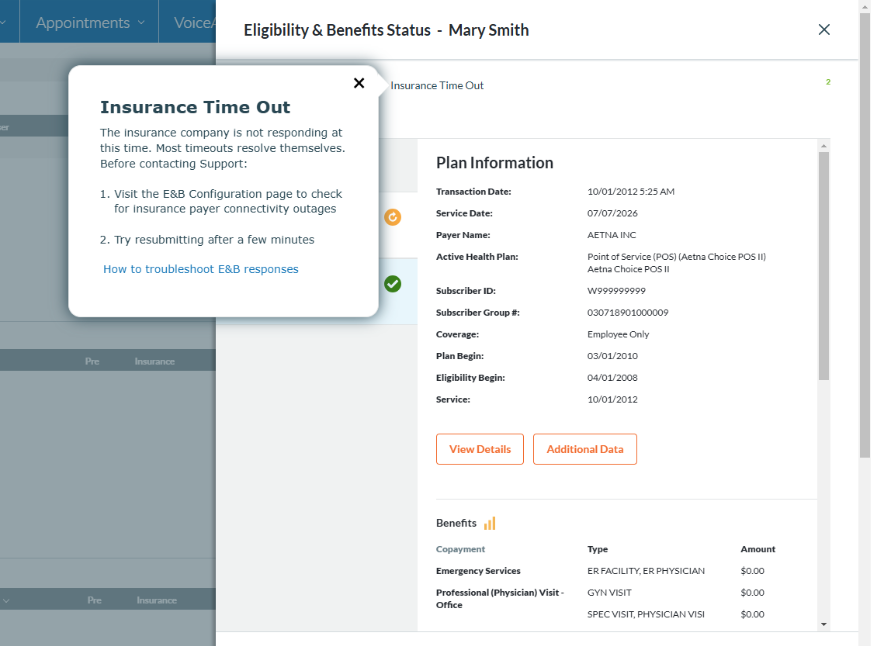
What’s new: You may start seeing tips, walkthroughs, and guidance directly within your Phreesia dashboard. These in-app prompts are designed to surface helpful information right where you need it, covering things like new features, workflow improvements, and where to find key resources.
How this helps you: Getting answers in the moment means less time searching for documentation and fewer interruptions to your team’s workflow.
Next step: This enhancement will be automatically available on the Phreesia dashboard; look for a brief in-app guide on your dashboard walking you through this update.
OnCall Updates
New badge shows unread non-urgent messages in the mobile app
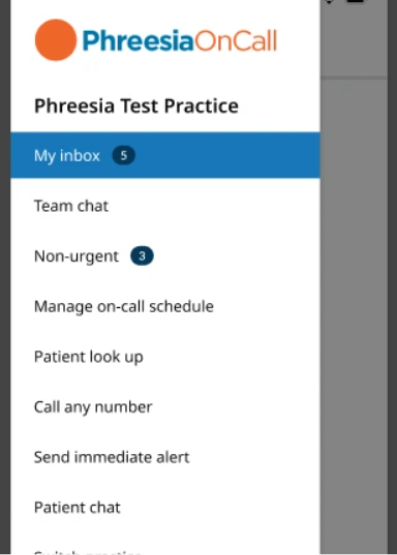
What’s new: The OnCall mobile app now displays a number badge on the menu indicating how many unread non-urgent messages are waiting, matching the indicator already used for urgent messages in the provider’s inbox.
How this helps you: Providers who need to review non-urgent messages while on call previously had no signal that messages existed without opening the app and navigating to the tab manually. The badge makes visibility instant, reducing the chance that time-sensitive non-urgent items go unnoticed.
How this helps you: This feature will be automatically enabled in the latest version of the OnCall application.
Communication
Control how provider names appear in patient communications
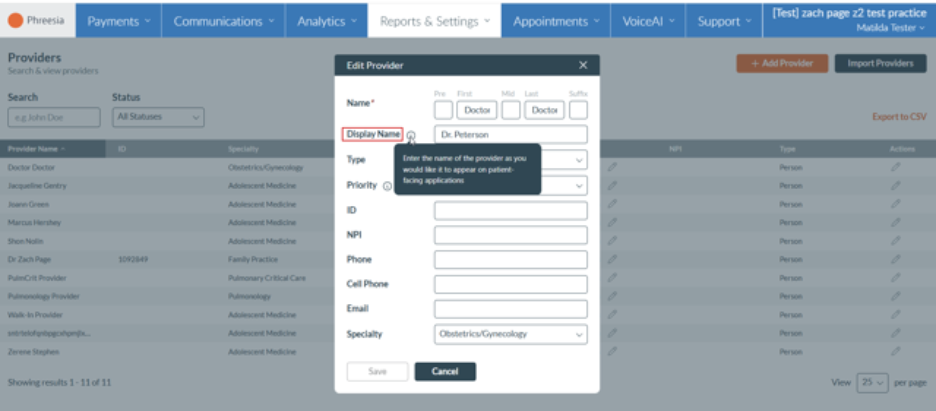
What’s new: Organizations can now configure how provider names are displayed in Phreesia communications, including emails, text messages, and broadcast templates.
How this helps you: When patients recognize the name a message comes from, they are more likely to open it, complete their intake, and follow through on next steps. Higher completion rates mean less time spent by staff on follow-up and more revenue captured at the point of care.
Next step: This enhancement is automatically available for all organizations sending Phreesia communications.
Patient first names now display in full in SMS messages
What’s new: Phreesia SMS messages now display patient first names more completely. Previously, first names were cut off after 10 characters. The limit has been raised to 12, covering nearly all first names in use across the US.
How this helps you: Patients are more likely to engage with a message that addresses them correctly. Accurate name display supports a better patient experience and reduces confusion for patients with longer names.
Next step: This enhancement is automatically available for all organizations sending Phreesia communications.
Registration
Registration logs: bulk document export is back
What’s new: The Registration Logs page has been updated with a refreshed interface and returns the ability to bulk export patient documents. Organizations experiencing integration issues can now recover directly from this page without contacting Phreesia support.
How this helps you: When integration issues arise, staff previously had to export patient records one at a time or open a support ticket. The updated page gives organizations a direct way to resolve these situations, reducing resolution time and dependence on support.
Next step: This enhancement will be automatically available upon release.
Navigation
Help Center is now called Knowledge Base
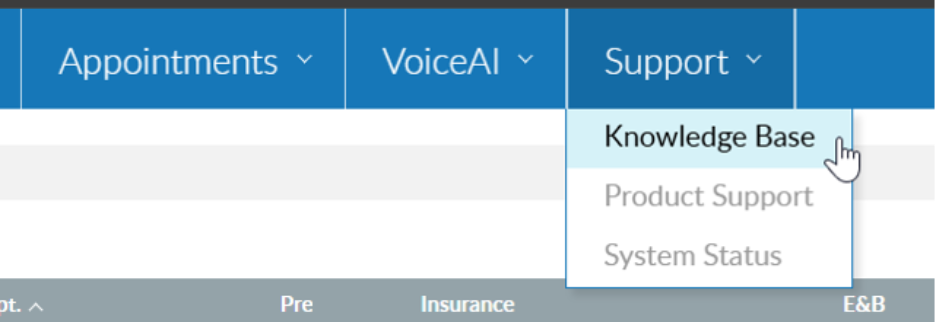
What’s new: The Help Center has been renamed Knowledge Base in the Phreesia dashboard. All articles and training content remain in the same place.
Security & Login
Stronger login security is coming: authenticator apps and passkeys
What’s new: Two new two-factor authentication (2FA) methods are coming soon to Phreesia: authenticator apps (such as Google Authenticator or Microsoft Authenticator) and passkeys that use your device’s built-in biometrics or PIN. Both work without cell service or email access and are significantly more resistant to phishing than SMS or email codes.
How this helps you: Healthcare organizations are high-value targets for credential-based attacks. Authenticator apps and passkeys are harder to intercept than SMS or email codes, giving your organization stronger protection at login without adding complexity for staff. Expanding available methods also gives your organization more control over how users verify their identity.
Login now defaults to your organization’s preferred 2FA method
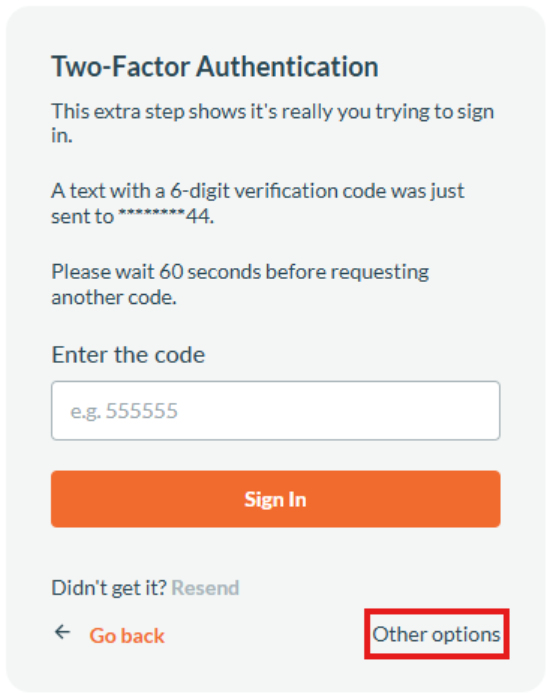
What’s new: Users are now presented with their organization’s configured priority two-factor authentication method at login, without having to select from a list first. An “Other Options” link remains available for users who need to use a different method.
How this helps you: For staff who sign in multiple times throughout the day, skipping the extra selection step removes friction and speeds access. Less time navigating verification screens means more time focused on patients.
Updated 2FA management interface
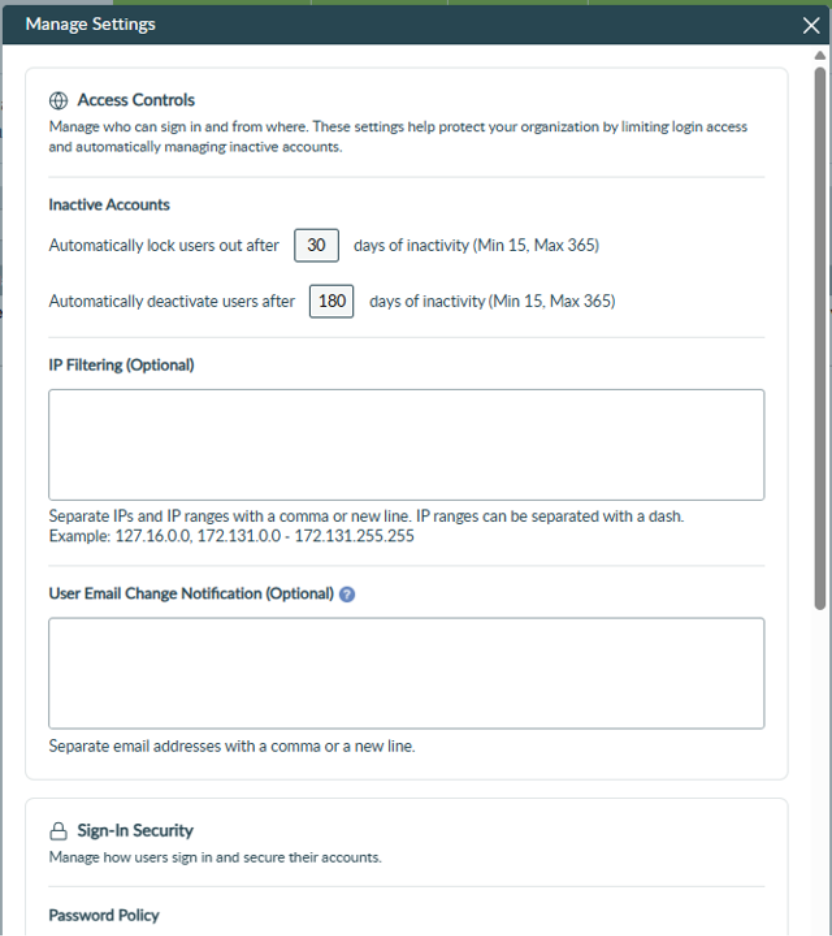
What’s new: The Managed Settings screen in User Management has been refreshed with a modern design. All existing functionality is the same. The update improves visual consistency across the 2FA setup and management experience, including how all available verification options are presented.
How this helps you: A cleaner, more consistent interface makes it easier for administrators to set up and manage verification options, reducing the chance of misconfiguration.
Phreesia Library
Phreesia offers a library of standardized tools and best-practice content designed to align with industry recommendations and increase completion rates. These pre-built modules can be seamlessly added to your existing intake workflows. Organizations that use these modules see a 9.5% lower drop rate, and patients complete interviews 48.8% faster compared to custom content.
Standardized tools
We now offer the following clinically validated patient-reported outcomes (PROs).
Pediatric Asthma Impairment and Risk Questionnaire (AIRQ-PEDS)
An 8-item parent/caregiver-reported questionnaire that assesses asthma control in children ages 5 to 11, using standardized scoring and interpretation categories to support clinical decision-making across pediatric, primary care, pulmonology, allergy, and asthma specialty organizations. A follow-up version tracks treatment effectiveness over a 3-month period for ongoing monitoring.