
GET EARLY ACCESS
Phreesia VoiceAI now schedules appointments — Hands-Free, 24/7
What’s new: Phreesia VoiceAI can now book appointments for returning patients through natural voice conversations, with confirmed appointments landing directly in eClinicalWorks. Patients can reach a booking confirmation without hold times, menus, or staff involvement.
How this helps you: Scheduling calls from returning patients are the highest-volume, most repetitive calls your front desk handles. Phreesia VoiceAI, a market-leading AI for healthcare phone communication, handles those calls automatically and around the clock. Nearly 50% of self-scheduled appointments happen outside business hours. With after-hours scheduling covered, your staff can focus on the interactions that actually require a person.
Phreesia VoiceAI Call Transfer: One number, every call handled
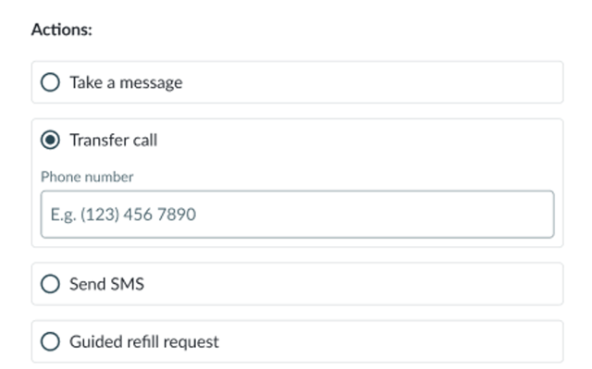
What’s new: Phreesia VoiceAI now supports live call transfers. When a caller needs a live agent, VoiceAI routes them directly to staff with no separate phone tree required. Organizations can configure intent-based transfers (specific call types always route to a designated line) or escalation transfers (triggered mid-conversation when staff involvement is needed). The caller’s own phone number is passed to staff, not the VoiceAI line.
How this helps you: Callers who need a person are connected rather than lost. Organizations that previously maintained a separate call tree alongside VoiceAI can consolidate their entire phone front end into a single system, reducing infrastructure complexity and overhead. Urgent or sensitive requests, like billing disputes and medication questions, now have a reliable path to staff within the same conversation.
Verify a third insurance within a single visit
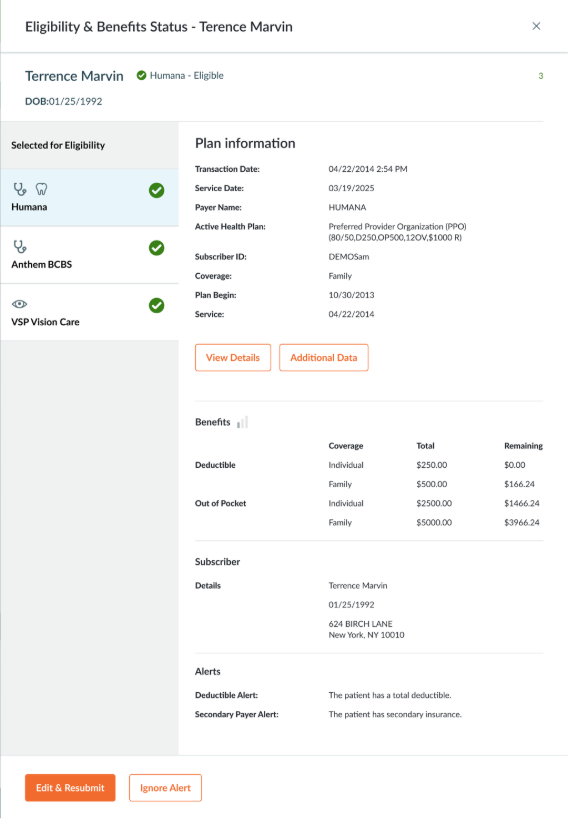
What’s new: Organizations can now assign and verify eligibility and benefit information for a third insurance on a visit, extending Phreesia’s E&B verification to support up to three active payers per visit.
How this helps you: Verifying third-payer coverage inside Phreesia reduces the manual effort staff spend checking coverage outside the platform and closes a gap that can lead to denials when the wrong payer is billed.
Next step: Available to Early Access clients.
PlanMatch flags Plan mismatches before they become denials
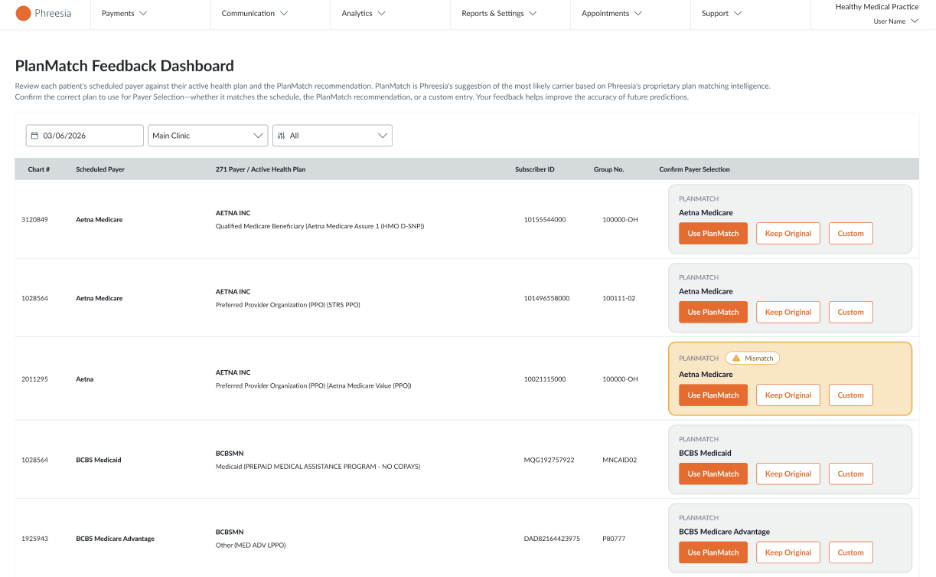
What’s new: PlanMatch uses AI to recommend the correct insurance plan for each patient, giving staff a pre-submission signal to review and confirm coverage before a claim is filed. As staff confirm recommendations, make corrections, or add custom payer entries, PlanMatch continuously refines its accuracy based on each organization’s visit patterns.
How this helps you: Active eligibility coverage does not confirm that the correct plan was selected. PlanMatch closes that gap, surfacing likely mismatches before they reach the payer and reducing denials caused by incorrect plan assignment. Every confirmed match, correction, and custom entry makes the AI more accurate for your specific patient mix.
🚀 Phreesia VoiceAI
Phreesia VoiceAI integration with Compulink is now generally available
What’s new: Phreesia VoiceAI integration features are now generally available for organizations using Compulink. This includes patient search and matching against the Compulink EMR, relevant patient information surfaced during calls, and automatic document export of call notes and transcriptions.
How this helps you: Staff handling after-hours calls get patient context automatically at the time of the call. Call notes are written back to Compulink without manual entry, eliminating documentation time and reducing the risk of incomplete charting.
Registration
Electronic policy signatures now consistent across mobile and PadX
What’s new: Policy signatures on PadX now default to typed signatures, matching the existing mobile experience. Handwritten signatures can still be enabled at the policy level when required for specific forms or payer needs.
How this helps you: A consistent, accessible signature experience across all devices reduces friction for patients at check-in, without any workflow changes for staff. Organizations that need handwritten signatures for specific forms or payer requirements can still enable them at the policy level.
Next step: Typed signatures are on by default for all organizations.
Communication
Nepali now supported in patient email and text communications
What’s new: Phreesia now supports Nepali in patient email and text communications. Organizations serving Nepali-speaking patients can communicate with them in their preferred language.
How this helps you: Reaching patients in the language they prefer improves response rates and reduces missed communications, without any workflow changes for staff. Support the full range of patients in your community.
Next step:This feature will be automaticallyenabled.
Patient Announcements now support alt text for images
What’s new: Email templates now support alt text for images. Patients who use screen readers or have images blocked will see descriptive text in place of images — so your message comes through clearly, no matter how someone reads their email.
How this helps you: Patients experience your communications the way you intended, even when images don’t load. This is especially meaningful for patients who use assistive technology like screen readers. The result: fewer communication gaps, a more consistent patient experience, and templates that hold up in every inbox.
Next step: Enabled by default — no action required.
Medication Adherence outreach now follows consistent quiet hours
What’s new: Medication Adherence communications now follow the same quiet hours as all other campaigns. Messages scheduled between 8 PM and 8 AM local time are held and delivered the next day starting at 11 AM, spread over an adaptive 2–6-hour window. Quiet hours are applied per the time zone of the location assigned to each campaign, supporting organizations with locations across multiple time zones.
How this helps you: Patients receive Medication Adherence outreach at appropriate times, consistent with every other Phreesia communication they receive. Coordinated timing across all campaign types reduces the risk of patients being reached at off-hours and supports a more cohesive, respectful communication experience.
Next step: This feature will be automatically enabled for all organizations using Medication Adherence.
Phreesia Library
Phreesia offers a library of standardized tools and best-practice content designed to align with industry recommendations and increase completion rates. These pre-built modules can be seamlessly added to your existing intake workflows. Organizations that use these modules see a 9.5% lower drop rate, and patients complete interviews 48.8% faster compared to custom content.
Standardized tools
We now offer the following clinically validated patient-reported outcomes (PROs).
Mental Health Quality of Life Questionnaire (MHQoL)
A 7-domain, clinically validated PRO measuring mental health-related quality of life using a 4-level response scale per domain and a 0–10 visual analog scale for overall psychological well-being. This gives care teams a standardized way to assess patient well-being beyond symptom-level data.
Survey of Well-being of Young Children (SWYC) Required Version
An updated SWYC configuration with all screening questions set as required fields, ensuring complete data capture across every developmental and behavioral assessment item for more reliable scoring, reporting, and clinical decision-making.